


-300x300.webp)
-300x300h.webp)
-300x300h.webp)
-300x300.webp)
-300x300h.webp)


-300x150w.jpeg "Westin")

-300x150w.jpeg "SPRO")
-300x150w.jpeg "Gamakatsu")
-300x150w.jpeg "Rapala")
-300x150w.jpeg "Z-Man")


-300x150w.jpeg "Shimano")

-300x150w.jpeg "Salmo")

-300x150w.jpeg "Savage Gear")


-300x150w.jpeg "Okuma")


-300x150.jpeg "Spider Wire")
-300x150w.jpeg "Daiwa")


-300x150w.jpeg "Berkley")





What Does JDM Mean in Fishing?
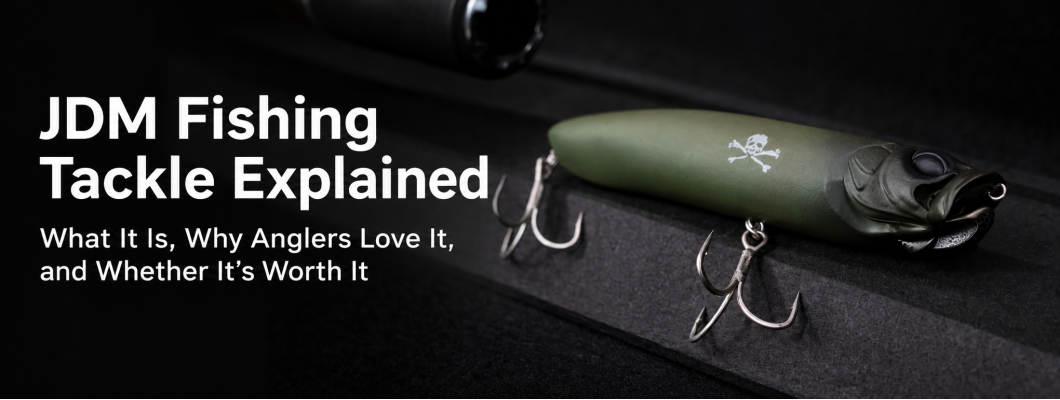
If you've spent any time on fishing forums, YouTube channels, or browsing specialist tackle shops, you've probably come across the term JDM. It stands for Japanese Domestic Market - and in fishing, it refers to tackle, lures, and gear that is produced specifically for sale within Japan rather than for export to international markets.
JDM tackle isn't just a different label on the same product. It's often a genuinely different product - built to tighter tolerances, finished to a higher standard, and designed around the incredibly exacting demands of Japanese anglers, who are widely regarded as the most technically obsessed fishing culture on the planet.
The result is a category of tackle that has developed something close to cult status among serious anglers worldwide: harder to find, sometimes more expensive, and - in many cases - genuinely superior to what's available through mainstream retail channels.
A Brief History: Why Japan Became the Home of Premium Tackle
Japan's fishing tackle industry didn't become the world's gold standard by accident. It's the product of decades of domestic competition, a unique fishing culture, and extraordinary manufacturing heritage.
The Culture Behind the Gear
Japanese anglers are meticulous. Tournament bass fishing in Japan - particularly on lakes like Biwa, Kasumigaura, and Ikehara - developed a competitive culture where marginal gains in lure action, hook sharpness, and line sensitivity genuinely mattered. Anglers demanded better, and manufacturers delivered.
This culture of precision filtered into every segment of fishing - from black bass to trout, from saltwater finesse to freshwater light tackle - producing a tradition of innovation that is still unmatched anywhere in the world.
The Manufacturing Heritage
Japan is home to some of the most respected names in fishing tackle manufacturing: Shimano, Daiwa, Megabass, Deps, Jackall, Nories, OSP, Gan Craft, and dozens of smaller boutique makers. Many of these brands produce separate product lines for domestic and export markets - with the JDM range sitting at a higher specification than what gets shipped internationally.
Why? Because the Japanese domestic market will pay for it, and will notice if it's not right. That standard of expectation is what drives the quality gap.
JDM vs. Export Tackle: What's Actually Different?
This is the question most anglers ask first - and the answer varies by product category.
Hard Lures
JDM hard lures are where the difference is often most dramatic. Japanese boutique manufacturers like Megabass, Deps, and Gan Craft produce lures for the domestic market with:
- Tighter action tuning - lures are often individually hand-tuned in the factory
- Premium hooks - Owner, Gamakatsu, and VMC hooks at a higher specification than export versions
- More refined paint finishes - multi-layer UV finishes, hand-painted details, and holographic effects not available on export models
- Additional colourways - JDM catalogues frequently include 30–50+ colour options versus a handful on export models
- Smaller, more precise size ranges - particularly for finesse styles that aren't commercially viable at export scale
Soft Plastics
JDM soft plastics are formulated differently - often with:
- Salt and scent impregnation - many JDM soft plastics are heavily loaded with salt and amino-acid attractants baked into the plastic itself
- Softer, more responsive material - Japanese soft plastics often use a more supple PVC formula that moves with minimal rod input
- More detailed moulding - legs, claws, and appendages on JDM creatures and craw baits are often more finely detailed than export equivalents
Rods
JDM rods are the category where many serious anglers say the difference is most noticeable. Japanese domestic rods - particularly from Shimano (Expride, Zodias, Bantam range) and Daiwa (Steez, Tatula Elite) - are built with:
- Higher modulus carbon blanks - stiffer, lighter, more sensitive than international equivalents at the same price point
- Lighter overall build weight - reducing fatigue over long sessions
- More refined guide placement and sizing - particularly on finesse models
- Tighter action specifications - tuned for the subtle bite detection that Japanese fishing styles demand
Reels
JDM reels frequently include:
- More bearing configurations - additional ball bearings in key locations for smoother retrieve
- Tighter gear mesh tolerances - less play and noise in the drivetrain
- Domestic-only finishes and colourways - often more restrained and elegant than export options
- Lighter spool options - for ultra-light line ratings not commonly used in Western markets
Hooks and Hardware
Japanese hooks - particularly from Owner and Gamakatsu - are regarded as the sharpest production hooks in the world. JDM-spec hooks often feature finer wire at equivalent strength, more precise point geometry, and coatings designed for specific applications. Many JDM lures come pre-rigged with these hooks; export versions are sometimes downgraded to reduce retail price.
Common JDM Tackle Styles and Techniques
JDM isn't just about hardware quality - it's also associated with specific fishing styles and techniques that originated in Japan and have since spread globally.
Finesse Fishing
Perhaps the biggest Japanese export in fishing is the concept of finesse - using lighter tackle, smaller lures, and more subtle presentations to catch fish that won't respond to conventional approaches. Drop shot rigs, ned rigs, Neko rigs, and wacky rigs all have roots in or were refined by the Japanese domestic bass scene.
Ajing and Mebaring
Two of Japan's most popular light saltwater techniques. Ajing targets horse mackerel (aji) on micro jigs and tiny soft plastics, while mebaring targets rockfish (mebaru/rockfish) on similarly light gear. Both use incredibly light line, tiny lures, and rods with extraordinary sensitivity - gear categories that barely exist in Western tackle markets.
Tairaba (Tai Rubber)
A deepwater jigging technique using a rubber skirt lure with a lead head, originally developed for red sea bream (tai). Now widely used across Europe for species from cod to bass to red mullet. JDM tairaba lures are the originals and often the most precisely engineered.
Eging (Squid Fishing)
Japan is the birthplace of modern squid fishing with egi lures. JDM egi - from brands like Yamashita, Duel, and Shimano - are the benchmark against which all other squid lures are measured. Weights, sink rates, and rattle configurations are tuned to extraordinary precision.
Micro Jigging and Slow Pitch Jigging
Both techniques were developed in Japan for offshore fishing and have since become global phenomena. JDM slow jigs and micro jigs often feature superior action profiles, better finish durability, and hook configurations not available on export versions.
Is JDM Tackle Worth the Price?
The honest answer: it depends on what you're fishing for and how seriously you take it.
When JDM Is Worth It
- Hard lures for species like bass, perch, pike, and wrasse - the quality of JDM hard lures is often genuinely superior and can make a real difference
- Rods for finesse fishing - lighter weight and higher sensitivity in a JDM finesse rod is immediately noticeable on the water
- Hooks - Japanese hooks at JDM specification are sharper, hold better, and are worth paying for
- Squid fishing - if you're eging seriously, JDM egi are simply the best available
When the Gap Narrows
- Soft plastics - the difference is real but less dramatic; quality European and US soft plastics are excellent
- Braid and leader - Japanese braid (Varivas, Sunline, YGK) is superb, but top-end Western lines are very competitive
- Entry-level reels - at the lower end of the market, export models offer very strong value
The Availability Factor
Part of the appeal of JDM tackle is exclusivity - not in a snobbish sense, but in the practical sense that if you're using a lure colourway or a technique that isn't widely available in your home market, you have a genuine edge on pressured, heavily-fished waters.
How to Buy JDM Tackle in the UK
Getting hold of genuine JDM tackle in the UK used to require knowing someone in Japan or paying premium grey-market prices. That's changing - specialist importers and retailers now bring in a curated selection of JDM gear, and the range available in the UK has expanded dramatically.
What to look for when buying:
- Authentic retailer - buy from specialist lure fishing retailers who import directly, not from generic marketplace listings
- Check colourways - genuine JDM often comes in colourways not listed on the brand's international website
- Japanese packaging - authentic JDM products typically have Japanese-language packaging (though not always)
- Model numbers - JDM models often have different model codes to their export equivalents; a quick search usually confirms
JDM Tackle at LURESET
We stock JDM and Japanese-influenced lures and tackle because they perform, not just because of the label.
Madotachi
“Functionality and Practicality” that goes beyond expectations
“Flexibility and Scalability” that harmonize with any environment and style
Delivering an exciting “Endless New Experience”
Graphiteleader
Graphiteleader rods are premium Japanese-built rods, designed for anglers who value light weight, sensitivity and refined lure control.
Ideal for everything from delicate LRF and perch fishing to powerful bass and saltwater lure work.
OSP
OSP lures are premium Japanese designs, made with precise actions and realistic detail to tempt pressured predators.
A strong choice for perch, pike, chub and bass anglers who want dependable performance.
Xesta
XESTA is a premium Japanese brand, known for high-quality rods, lures and tackle developed for precise saltwater lure fishing.
Ideal for anglers targeting bass, mackerel and other UK saltwater species.
Browse all Japanese & JDM tackle at LURESET → JDM Tackle
Frequently Asked Questions
Is all Japanese tackle JDM?
No. Major brands like Shimano and Daiwa sell internationally and produce export-spec products. JDM specifically refers to products made for the Japanese domestic market - often at a higher specification.
Can I use JDM tackle for UK sea fishing?
Absolutely. JDM techniques and lures translate extremely well to UK saltwater species - bass, wrasse, pollock, and mackerel in particular. Light finesse styles, eging for squid, and tairaba jigging are all directly applicable.
Why don't brands just sell their best tackle everywhere?
Economics. The Japanese market is willing to pay for extreme precision in ways that mainstream Western retail cannot sustain at scale. Producing and marketing ultra-premium products to a mass market isn't viable - so the top-tier gear stays domestic.
Is JDM tackle covered by warranty in the UK?
This varies by brand and retailer. Buy from a reputable specialist who can advise - some brands honour international warranty claims, others don't.
Will JDM lures catch more fish for me?
Better tackle helps at the margins, but technique, location, and timing matter far more. That said, a sharper hook, a more precisely tuned lure action, and a more sensitive rod will genuinely make you a more effective angler over time.
Summary
JDM fishing tackle is not hype - it represents the output of a fishing culture that demands more from its gear than anywhere else in the world. The quality of Japanese domestic market lures, hooks, rods, and soft plastics is often measurably better than their export equivalents, and the techniques associated with JDM fishing have transformed how anglers approach light-tackle and finesse fishing across the globe.
Whether you're a bass angler looking for an edge, an egi enthusiast chasing squid, or simply a tackle lover who appreciates precision engineering, exploring JDM gear is well worth the effort.
Key points to remember:
- JDM = Japanese Domestic Market; gear made for and sold within Japan
- Quality differences are most pronounced in hard lures, rods, and hooks
- Finesse, ajing, eging, and slow pitch jigging are JDM-rooted techniques with huge crossover to UK fishing
- Buy from specialist retailers who import genuine product
- The investment is justified for serious anglers; marginal for casual fishing
Related Posts:
